

Teaching Music Outdoors: Nature-Based Activities for Early Childhood
Teaching Music Outdoors: Nature-Based Activities for Early Childhood
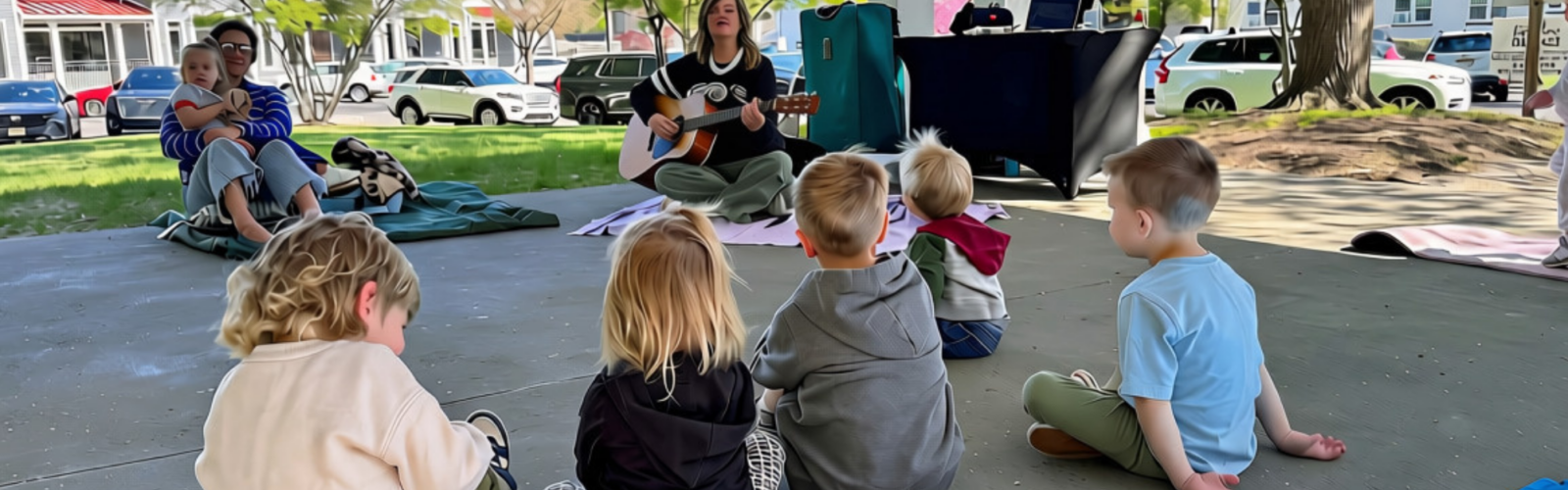
How many times do you extend outdoor play just a little bit, because you can clearly see the value in children’s nature-based learning activities? There are so many opportunities to extend these essential experiences, and creating opportunities for musical exploration outdoors is one of our favorite ways to do it!
Why Outdoor Music Learning Matters
One of the best things we can do for children is provide plenty of time to explore and play in nature. Greenspace and outdoor time can even reduce anxiety and depression and create a sense of respect for our world and environment.
Many early childhood music philosophies incorporate natural elements, with Reggio-Emlia Inspired Education and Waldorf Education among the most common. Sensory play has even been brought outdoors with the use of kitchens that include water, sand, and dirt elements.
Students have shared that when they create music outside, they feel free. Outdoor music creation gives children access to calm and to parts of themselves that can be difficult to access indoors.
Musical Playground
You don’t need to redesign your facility to create a new outdoor classroom. You can create opportunities for musical exploration and nature play with what you already have.
Outdoor music play spaces can be as simple as attaching buckets or pots and pans to the fence to create a drumming wall. You could also create wind chimes to hang outdoors. By allowing children to explore their existing environment, we are fostering creativity and encouraging musical exploration that will strengthen their improvisation skills.
Of course, there are plenty of options for purchase, such as xylophones and chimes. We love instruments that allow children to control the outcome and explore freely, such as this one found at the Perot Museum in Dallas, TX.
Found Sounds Nature Walk & Ear Training

Preschool music activities are easily embedded into your existing routines. Consider transforming your nature walk into a sounds walk. As children begin to distinguish between various sounds, they are actually doing some introductory ear training which is a key component of later musical development.
You may also choose to use the items you find in nature to create a listening activity. Can you tell whether I’ve crunched some leaves or tapped sticks together? Am I rubbing tree bark or tapping rocks?
Bird Identification
Children love becoming experts on a specific topic, and bird identification would be an excellent option! Add bird identification books to your classroom library, and create a printable with images of the various birds in your area. As a class, keep track of the birds you’ve identified during your nature walk. Bring your list each time you go outside, and see how many different birds you can identify throughout the year.
With older children, we may try using instruments to recreate those sounds or listen to music such as selections from Overture to the Hebrides to notice how musicians have been inspired by nature and guess which natural elements have been incorporated.

Nature-based Musical Contrasts
Kids’ MusicRound’s “Noisy & Quiet” song is a great foundation for exploring musical contrasts in early childhood. As you sing the song, incorporate the sounds and contrasts you’ve heard in nature.
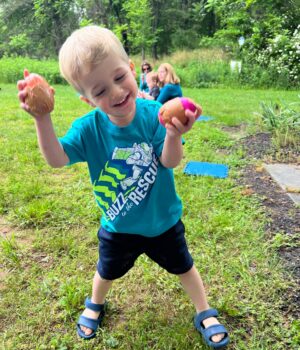
With older preschool and kindergarten students, consider having each child create or choose an instrument they’d like to play while they sing. Putting pebbles in a plastic egg is a great option, and it supports fine motor development as well as musical development. While taping the egg may not be the cutest option, it provides another opportunity to have the preschoolers practice fine motor skills and build independence. Additionally, children may choose to explore changes they can make to the sound when they swap out what they’ve put in their shakers.

Parent-Child Music Class
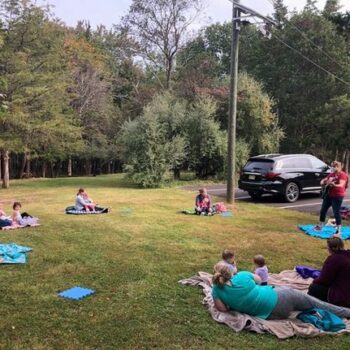
Why not bring your whole music class outdoors? Many of our music teachers have taken their classes outside, and some teachers have even taught full semesters outside! There are a few things we like to consider when creating a meaningful, fun-filled outdoor experience.
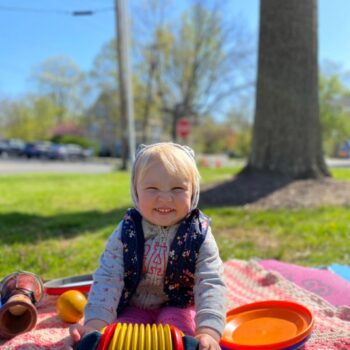
Planning for Your Outdoor Music Class
Location:
- Boundaries: A fenced area is ideal, but anything with natural boundaries is great. If this doesn’t exist, consider having each family bring a blanket or towel to help define the class space.
- Shade: A pavilion can be a great option and works best when you use blankets as seats to prevent an echo. If you don’t have the shade of trees or a pavilion, be sure to choose your class time carefully and have an indoor location ready for inclement weather.
- Playgrounds: Avoid these whenever possible. Nothing can compete with the fun of a slide.
Equipment:
- Wagon to transport materials:
Portable speaker
Blankets for families who may have forgotten
Wipes & hand sanitizer
Trash bag
Instruments as needed
- QR code & registration form: Seeing your class in action can be a great marketing tool!
Classroom Management:
Bubbles: These are a great way to transition into class time
Work with your environment. Has a bird joined in the song? Consider pausing to listen.
Take it slow. Allow time to fully engage with your surroundings. It’s not about the number of songs you sing in each lesson. It’s about fully participating in the musical community.
Need a Pre-K lesson plan you can trust to work? Try ours!
Movement Inspired by Nature
Many of our activities are inspired by nature, from “The Wind Blew East” to the thunderstorms we create at the end of our drum songs.
It’s also a great way to begin exploring the weight of different movements and the various ways we could express the concepts. Here are a few ideas:
- Swaying like trees in the wind
- Floating like leaves falling from branches
- Hopping like rabbits
- Soaring like birds
- Dancing like raindrops
With other children, we may translate the movements into sounds and even instruments from a simplified JamRound Bag.
Conclusion
Connecting music, movement, and nature creates meaningful learning experiences that engage children’s natural curiosity and creativity. These connections help children develop musical skills while fostering an appreciation for the natural world. By integrating outdoor experiences with musical learning, we create opportunities for holistic development that resonates with children’s innate desire to explore and understand their world through multiple senses.
Remember that each outdoor space, whether a sprawling park or a small courtyard, offers unique opportunities for musical discovery. The key is to approach these experiences with wonder and creativity, allowing children to lead the way in discovering the magical connections between music and nature.
If you’re looking for ready-to-teach preschool music or ways to better engage your early childhood students, explore our research-based curriculum designed specifically for early childhood educators.
Frequently Asked Questions
What are nature-based music activities?
Nature-based music activities include any activity where you’re incorporating natural elements or being inspired by nature. These may include listening walks or using found sounds as instrumental accompaniments.
How can I teach music outdoors?
It depends on what type of lesson you’re looking to teach. If you want to incorporate nature-based music activities into your preschool class, you can just head outside whenever it works into your schedule. The activities above will work beautifully with your own tweaks for your unique students and teaching style.
If you’re looking to teach a parent-child music class on a regular basis, you’ll want to keep a few things in mind:
- Location: A simple spot without distractions and far from roads is a winner. If you need help, our licensees receive individualized support, so please feel free to contact us to learn more about the process.
- Schedule: Consider your geographic location and weather. When I taught in the northeast, I was in a location that was covered and outside a coffee shop, so rain did not matter. However, I had to consider maintenance staff and when the coffee shop would be moving tables outside. Now I’m in Texas, so my considerations would be completely different.
- Materials: How will you get your class materials to your location? If you want to use materials found in nature, how will your insurance company feel about the liability? What will they permit, and what will you need to adjust?
What Natural Materials Can Be Used as Instruments?
It’s limited only by your imagination! Pretty much anything can work under the right circumstances. Here are a few ideas to get you started:
- Sticks (check for splinters)
- Rocks (check size to ensure they’re not a choking hazard)
- Leaves (crunching them is such fun for children, and jumping in piles is one of my favorite parts of early childhood!)
- Rubbing sticks/rocks on tree bark
Sources:
- Kris, Deborah Farmer. (2025). “How Moments in Nature Help Kids Thrive.” Greater Good Magazine: Science-Based Insights for a Meaningful Life. https://greatergood.berkeley.edu/article/item/how_moments_in_nature_help_kids_thrive
- Strife, Susan and Downey, Liam. (2011). “Childhood Development and Access to Nature.” National Library of Medicine. https://pmc.ncbi.nlm.nih.gov/articles/PMC3162362/
- Class pictures: Sandy Henriques, Kids’ MusicRound Center Director, Bensalem, Langhorne and Yardley, PA & Beth Stone, Kids’ MusicRound Center Director, Bridgewater, Branchburg, Hillsborough and White House, NJ
Written by:

Explore Kids' MusicRound
Copyright © 2026. Kids’ MusicRound, LLC.
www.KidsMusicRound.com
609-333-0100